
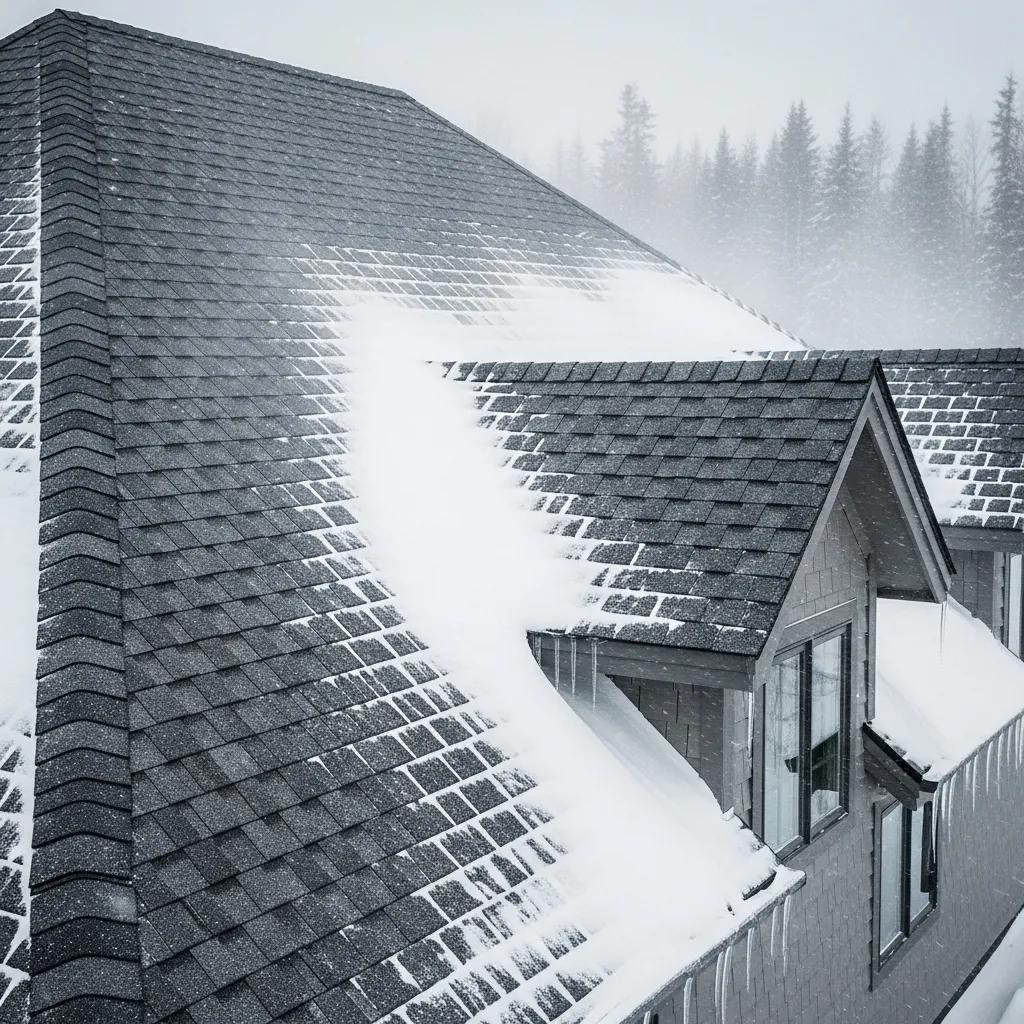
Can You Replace a Roof in Winter in Minnesota? (Honest Answer, 2026)
The roof fails in December. Naturally. And the first three people you ask deliver three confident, contradictory verdicts: “nobody roofs in a Minnesota winter,” “winter’s actually the best-kept secret in roofing,” and “you’ll void every warranty.” Time for the honest version from a company that has installed roofs in every month Minnesota offers: yes, roofs can absolutely be replaced in winter here — correctly and warrantably — but it’s a technique-dependent yes, the trade-offs are real, and whether your December project should happen in December or wait for April depends on a short list of factors we’ll walk through. No sales spin in either direction; just how the cold actually changes the work.
What Cold Does to a Roofing Project
Three material realities drive everything. Asphalt gets brittle: cold shingles crack if bent or dropped carelessly, so winter crews handle differently, stage bundles warm, and slow down — craftsmanship matters more, not less. Seal strips hibernate: the sun-activated adhesive that bonds each shingle course to the next won’t fully activate until sustained warmth arrives, so winter installs rely on technique in the meantime — proper nailing (placement matters more than ever) and hand-sealing vulnerable courses with approved roofing cement at eaves, rakes, and exposed runs. Manufacturers publish cold-weather installation guidelines for exactly this; GAF and Owens Corning roofs installed to those specs carry their full warranties year-round. Days get short and snowy: production windows shrink, decks must be cleared and dry, and schedules flex around weather in both directions. None of this makes winter roofing improper — it makes it a discipline, which is precisely why the question isn’t “can roofs be installed in winter?” but “does this crew install winter roofs routinely?” Ask for their cold-weather protocol; fluency is the tell.
When Winter Replacement Is Clearly Right
Active failure doesn’t respect seasons: a leaking, storm-opened, or structurally compromised roof does more damage every week it waits — saturated decking, wet insulation, and interior spread cost multiples of any seasonal inconvenience, and “we’ll tarp until spring” is a plan that works better in conversation than under snow load. Insurance timelines: claims from fall storms carry completion expectations, and supplements, depreciation recovery, and policy windows don’t pause for the solstice. Availability and pricing: the flip side of winter’s challenges is winter’s calendar — crews that are booked five weeks out in June can often start next week in January, and pricing is at its most negotiable when companies are filling schedule rather than rationing it. Ice dam emergencies with underlying roof failure: when February reveals that the “ice dam problem” is actually a failed roof edge, replacement now beats a spring of Februaries. For all of these, a competent winter install beats waiting — full stop.
When Waiting for Spring Is the Smarter Call
If the roof is aging but sound — no active leaks, no storm damage, just a replacement on the horizon — spring scheduling buys real advantages: faster seal-strip activation, longer workdays, easier deck inspections (no snow clearing between you and discovered problems), and gentler conditions for the meticulous flashing work complex North Oaks rooflines demand. Same logic for discretionary upgrades — the cedar-to-Class 4 conversion or color refresh planned for its own sake schedules better in shoulder season, ideally contracted in winter to hold an early-spring slot before the post-storm rush (a strategy our cost guide covers). And any project where the contractor hesitates about winter conditions deserves the wait — hesitancy and cold-weather quality don’t coexist. The decision rule we give neighbors: failing roof, file the winter start; functioning roof, book the spring slot now and enjoy the season knowing it’s handled.
What a Proper Winter Install Looks Like
If you proceed, here’s the quality checklist: materials staged warm and delivered in installable batches; deck fully cleared, dry, and inspected before underlayment (winter is actually excellent for spotting ventilation problems — frost patterns in the attic map air leaks like dye); ice-and-water membrane installed generously at eaves and valleys (cold-climate best practice regardless of season, non-negotiable in it); hand-sealing per manufacturer cold-weather specs on exposed courses; realistic scheduling with weather contingency built in rather than promised through; and normal-scope cleanup — magnet sweeps work fine on frozen lawns, and snow is no excuse for spring nail surprises. Owl Roofing installs through Minnesota winters under exactly this protocol, with the same 10-year workmanship warranty we attach in July — because the standard is the standard, whatever the thermometer says. (651) 977-6027 if December just became your roofing month; we’ll tell you honestly whether it should be.
A Realistic Winter Project Timeline
For planning purposes, here’s how a well-run January replacement actually unfolds in the north metro. Week one: inspection, scope, and contract — faster than summer because calendars are open. Week two: materials ordered and staged, permit filed, weather window identified (crews watch ten-day forecasts for the two-to-four clear days most homes need). Install: tear-off and dry-in prioritized so the house is never exposed overnight — winter discipline means sections opened only as they can be closed — with shingling proceeding through the cold per manufacturer technique. Completion: full cleanup (magnets work fine on frozen turf), documentation package, and — unique to winter installs — a scheduled spring check to verify seal-strip activation once sustained warmth arrives, a follow-through step worth confirming any winter contractor includes. Total elapsed time frequently beats summer projects despite the slower install pace, because every queue is shorter. The season asks more of the crew and less of your patience — a reasonable trade when the roof can’t wait.
Bottom line: winter isn’t roofing’s off-season here — it’s the season with honest availability. When your roof forces the question in January, the answer is technique, not postponement.
And if you’re reading this with a bucket in the hallway: call today, not at thaw — the schedule is the one thing winter makes easy.
Frequently Asked Questions
Can you replace a roof in winter in Minnesota?
Yes — properly and warrantably, using manufacturer cold-weather techniques: careful cold-shingle handling, correct nailing, and hand-sealing exposed courses until spring sun activates the seal strips. The requirement is a crew that does it routinely.
Will a winter-installed roof be covered by warranty?
Yes, when installed to manufacturer cold-weather guidelines — GAF and Owens Corning both publish them, and certified installers following them preserve full material warranties. Workmanship warranties (like Owl’s 10-year) apply identically year-round.
Is winter roof replacement cheaper?
Often somewhat — winter is roofing’s open calendar, so scheduling is fast and pricing at its most flexible. Savings shouldn’t drive the decision alone, but they’re a real offset to winter’s slower pace.
Should I wait until spring if my roof is leaking?
No — active leaks compound damage weekly through saturated decking and insulation. A proper winter replacement (or at minimum professional emergency repair) beats months of managed leaking every time.
What temperature is too cold to install shingles?
There’s no absolute cutoff — manufacturers specify handling and sealing techniques rather than banning temperatures. Practically, experienced crews work productive stretches through most of a Minnesota winter, planning around the harshest snaps.
Roof picking a fight with winter? Get an honest read on now-versus-spring — free, with photos. Owl Roofing: (651) 977-6027.
