
Metal Roof vs. Asphalt Shingles in Minnesota: The Complete Comparison (2026)
It’s the roofing debate every Minnesota homeowner eventually has — usually in February, watching snow slide cleanly off a neighbor’s standing seam while their own shingles disappear under an ice dam. Metal roofing’s pitch is seductive: fifty-plus years, snow that removes itself, and a look that flatters the right architecture. Asphalt’s counterargument is equally real: half the upfront cost, easier repairs, and modern designer lines that have closed most of the aesthetic gap. As a company that installs and repairs both across North Oaks and the north metro, we don’t have a horse in this race — we have ladders on both kinds of roofs every week. Here’s the honest comparison, Minnesota edition.
The Head-to-Head Numbers
| Factor | Asphalt (Architectural/Class 4) | Standing Seam Metal |
|---|---|---|
| Installed cost (typical North Oaks home) | $15,000–$45,000 | $40,000–$80,000+ |
| Expected lifespan (MN) | 20–30 years | 40–60 years |
| Hail performance | Good with Class 4; standard bruises | Dents cosmetically, rarely fails functionally |
| Snow behavior | Holds snow (usually fine) | Sheds dramatically — plan for it |
| Ice dam resistance | Depends on attic (like all roofs) | Better shedding, same root causes |
| Repair simplicity | Easy, any competent roofer | Specialist work, pricier |
| Insurance treatment | Class 4 discounts common | Discounts common; cosmetic exclusions too |
| Resale fit in North Oaks | Broadly expected | Architecture-dependent premium |
Where Metal Genuinely Wins
Lifespan is the headline: a quality standing seam system, properly installed, plausibly outlasts two asphalt roofs — which reframes the 2x upfront cost as roughly cost-parity over 50 years, before counting the replacement disruption you skip. Snow shedding is real: steep metal planes clear themselves in sun that leaves shingles loaded for weeks, reducing sustained loads and shortening the window ice dams have to form. Fire, rot, and pest immunity round out the durability case, and summer efficiency is a modest bonus — reflective coatings shave cooling loads on sun-exposed planes. On the right North Oaks architecture — modern designs, lake-cabin aesthetics, dramatic rooflines visible through trees — standing seam also simply looks spectacular in a way that photographs and appraises accordingly.
Where Asphalt Holds Its Ground
The budget math favors asphalt today: half the capital outlay, and if you’re likely to move within 15 years, you’ll never collect metal’s longevity dividend — the next owner will. Repairs are democratic: any competent roofer fixes shingles affordably; standing seam repairs need specialists and cost accordingly, which matters under oak canopy where falling limbs are a when-not-if. Hail nuance cuts both ways: metal rarely fails from hail, but it dents — and Minnesota insurers increasingly attach cosmetic-damage exclusions to metal roofs, meaning a hail-textured roof you’re unhappy looking at may be entirely your problem. Class 4 asphalt (see our full guide) hits a sweet spot: strong hail performance, standard insurability, familiar repairs. And neighborhood fit is real: in traditional North Oaks streetscapes, designer asphalt reads native; a metal roof on the wrong colonial can look like a hat borrowed from a different outfit.
The Minnesota-Specific Deciders
Three local factors that should tip your decision. Snow shedding needs a plan: metal’s avalanches land somewhere — above entries, decks, gas meters, and foundation plantings, that’s a design problem requiring snow guards and thoughtful layout; budget for them. Ice dams don’t care about your roofing material: they’re born from attic heat loss, and metal only changes the symptoms — the real fix lives in insulation and ventilation (our attic guide covers it), whichever surface you choose. Installer skill gaps are wider in metal: asphalt’s labor pool is deep and quality-verifiable; standing seam craftsmanship varies enormously, and a badly-detailed metal roof is an expensive way to buy oil-canning and leaks. If you go metal, vet the portfolio hard and expect to wait for the good crews.
Our Bottom-Line Guidance
Choose metal when: you’re planning decades in the home, the architecture flatters it, budget accommodates doing it excellently, and you’ll engineer the snow-shed details properly. Choose Class 4 asphalt when: you want the strongest value-per-dollar in hail country, broad insurability, easy future repairs, and a look that fits any North Oaks streetscape. Choose standard asphalt mainly when budget rules or a sale is near. And in every case, spend your real diligence on the installer and the attic underneath — because the most common roof failure in this community isn’t a material choice; it’s details done cheaply under whichever material won the debate.
The Hybrid Answers Worth Knowing
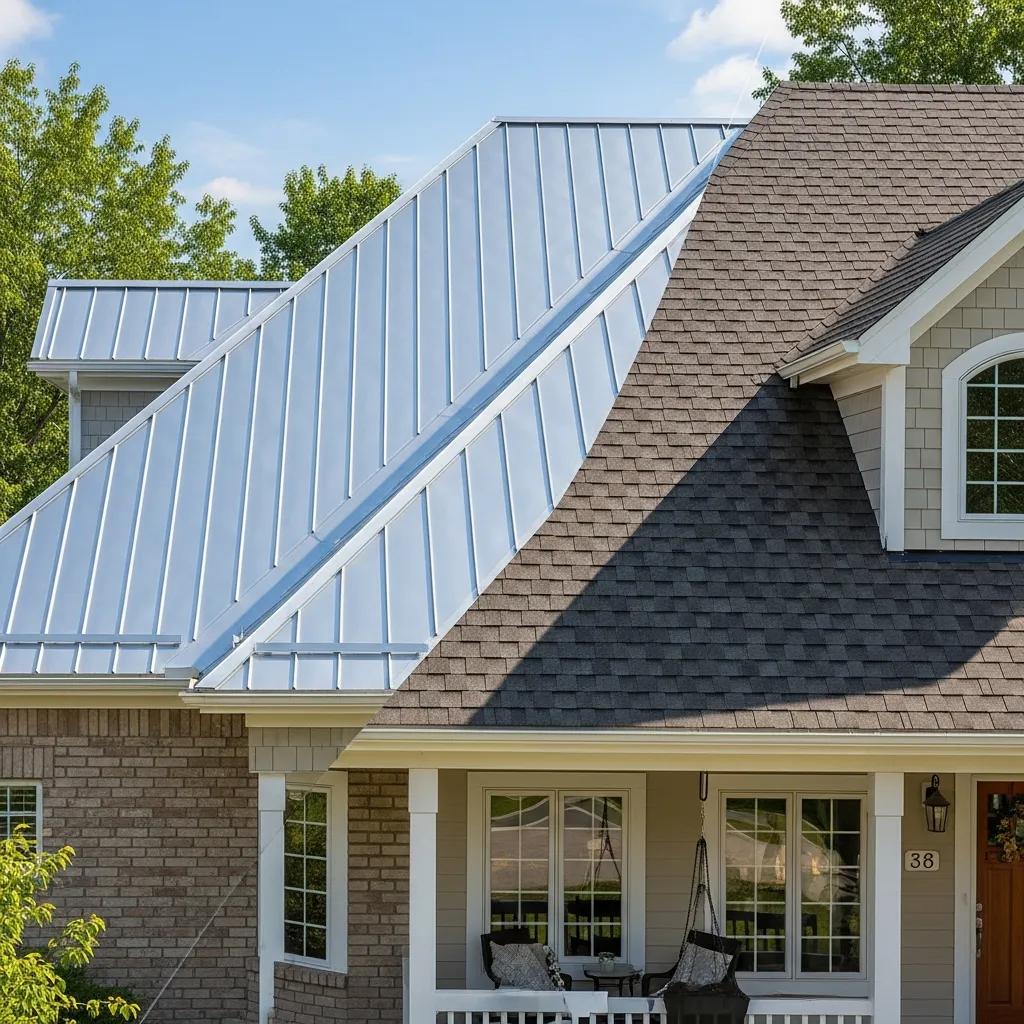
The metal-versus-asphalt debate isn’t strictly binary, and two hybrid paths fit North Oaks homes well. Mixed-material designs put standing seam where it earns its premium — porch roofs, dormers, low-slope transitions, accent planes visible from the drive — over Class 4 asphalt on the main field. You capture metal’s looks and its shedding where geometry needs it, at a fraction of whole-roof metal cost; on complex North Oaks rooflines the effect is often better than either material alone. Stone-coated steel — metal panels textured and granule-coated to read as shake or tile — offers metal longevity in profiles that suit traditional architecture where raw standing seam would fight the house. Both approaches demand installers fluent in the transitions where materials meet (flashing junctions are where mixed roofs live or die), which loops back to this article’s real conclusion: whatever material wins your debate, the installer’s detail work decides whether you actually receive what the material promised. Choose the crew as carefully as the metal — or the asphalt.
And whichever way you land, insist on seeing the details drawn before signing: eave and valley treatments, snow-guard layout on metal, ventilation continuity on both. A one-page proposal for a $60,000 roof is a red flag in either material; the good installers in both camps produce specifics happily, because specifics are where their advantage lives.
Roofs are thirty-year decisions in a community built for fifty-year thinking — take the extra week to compare properly, walk a couple of local installs of each material if you can, and buy the roof that fits both the house and the horizon you actually plan to keep it on.
Frequently Asked Questions
Is a metal roof worth it in Minnesota?
For long-term owners with suitable architecture, often yes — 40–60 year lifespans, dramatic snow shedding, and excellent durability justify the roughly 2x upfront cost. For shorter horizons, Class 4 asphalt usually delivers better value.
Does hail ruin metal roofs?
Hail rarely causes functional metal roof failure, but it dents — and many Minnesota insurers exclude cosmetic damage on metal, meaning visible denting may not be covered. Read your policy’s endorsements before choosing metal for hail reasons.
Do metal roofs prevent ice dams?
They shed snow faster, which helps — but ice dams originate from attic heat loss, which metal doesn’t fix. Proper insulation and ventilation prevent dams under any roofing material.
How much more does metal cost than shingles?
Standing seam typically runs 2–2.5x architectural asphalt installed — $40,000–$80,000+ on typical North Oaks homes versus $15,000–$45,000. Over 50 years the totals converge; over 15 they don’t.
Which lasts longer in Minnesota — metal or asphalt?
Metal, decisively: 40–60 years versus 20–30 for quality asphalt. The question is whether you’ll own the home long enough to collect the difference.
Debating for your own roof? Get both options priced on your actual home — free, with photos and no leaning on the scale. Owl Roofing: (651) 977-6027.
